
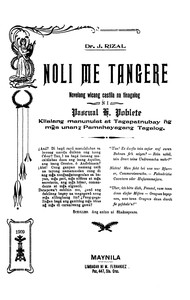
Noli Me Tangere by José Rizal
Noli Me Tangere isn't just a book; it's a national treasure for the Philippines, and once you start, you'll see why. Published in 1887, it was so explosive that owning a copy could get you in serious trouble with the Spanish authorities. José Rizal wrote it to expose the brutal realities of life under colonial rule, and he does it by making you care deeply about the people suffering through it.
The Story
We follow Juan Crisóstomo Ibarra, a young, idealistic man who comes back to his hometown after years of education in Europe. He dreams of building a school and helping his community. But his homecoming is shattered. He discovers his father died in prison under mysterious circumstances, the woman he loves (María Clara) is trapped in a gilded cage, and the local friars and officials wield absolute, often abusive, power. The story follows Ibarra as he slowly uncovers the dark truths about his father's death and clashes with a society that resists any change.
Why You Should Read It
What struck me most weren't the big political moments, but the small, human scenes. The desperation of Sisa, a mother searching for her lost sons, will haunt you. The arrogance of Padre Dámaso makes your blood boil. Rizal populates his novel with characters who feel incredibly real—you'll love some, despise others, and recognize the flaws in a few. It’s a masterclass in showing how power corrupts and how resilience survives.
Final Verdict
This is for anyone who loves historical fiction with heart and a sharp edge. It's perfect for readers curious about Southeast Asian history, or for those who enjoy classic novels of social protest like Uncle Tom's Cabin or Les Misérables. Fair warning: it’s not a light read. It’s a passionate, detailed, and sometimes heartbreaking look at a society on the brink. But it’s a story that stays with you, a powerful reminder of why we fight for justice.
There are no legal restrictions on this material. It serves as a testament to our shared literary heritage.
Donald Thomas
3 weeks agoI've gone through the entire material twice now, and the attention to detail regarding the core terminology is flawless. It definitely lives up to the reputation of the publisher.
Richard Taylor
11 months agoExceptional clarity on a very complex subject.
John Lopez
7 months agoI started reading this with a critical mind, the concise summaries at the end of each section are a lifesaver. Well worth the time invested in reading it.
Nancy Thomas
6 months agoAfter a thorough walkthrough of the table of contents, the step-by-step breakdown of the methodology is extremely helpful for students. The price-to-value ratio here is simply unbeatable.



Jennifer Perez
7 months agoAs a professional in this niche, the wealth of information provided exceeds the average market standard. This has become my go-to guide for this specific topic.